- Fresh Salmon
- Posts
- The New B2B Funnel is Memory
The New B2B Funnel is Memory
Most companies are still trying to capture demand. The better ones are building memory before the buyer ever enters the market.

Vivek Nanda
June 07, 2026
In partnership with

Hello and welcome to the 214th edition of Fresh Salmon.
If you're new here - welcome aboard.
And if you’d like to catch up on past issues, you can explore the archive anytime.
Meet our primary partner for today’s edition: Belay. Check them out 👇
Your business has grown. Is your accounting on the same path?
When you started out, doing your own books made sense. But the business you're running today isn't the one you started. If your accounting hasn't kept pace, it's quietly costing you — outdated financials, no clear view of what's actually profitable, and hours every week pulled away from the work that grows your business. At BELAY, our Financial Experts integrate directly into your business. They manage your books, reconcile accounts, run payroll, and deliver the timely insight you need to make big decisions with confidence. Stop guessing. Start knowing.
The New B2B Funnel is Memory
Hello and welcome to another edition of Fresh Salmon.
Most B2B companies are still building marketing like the buyer journey is clean.
Awareness → interest → consideration → demo → close.
Nice little boxes.
Nice little attribution reports.
Nice little fantasy.
That is not how most buyers actually buy anymore.
In reality, a buyer has a problem.
They hear about a few companies over time.
They see a founder’s post.
They listen to a podcast clip.
They hear someone mention a brand in a Slack group.
They ignore an ad.
They read half a newsletter.
They forget.
Then the problem gets painful.
Then they search.
And when they search, they do not start from zero.
They start with memory.
That is the part most companies miss.
The future of B2B marketing is not just demand generation.
It is memory creation.
Because when your buyer finally enters the market, the question is not:
“Who has the best landing page?”
The question is:
“Who do I already trust enough to consider?”
Meet our secondary partner for today’s edition: Hubspot. Check them out 👇
What happens when you throw out the GTM playbook

That investor was wrong. Gamma is now worth $2B, with 50M users and more than half their growth driven by word of mouth.
They're one of 6 AI-native startups in HubSpot for Startups' free Bold Bets Playbook. Replit grew revenue 50x after half the team pushed back on the strategy. Ramp generated 100M+ views from a single stunt. Clay's co-founder wouldn't hang up a sales call until the prospect DMed him in Slack.
Each one took a GTM risk most founders would never greenlight. Each one paid off.
1. Most B2B companies are over-optimized for capture
Here is the classic B2B marketing mistake:
The company spends all its energy on people who are already in-market.
Search ads.
Retargeting.
Demo pages.
Comparison pages.
Bottom-of-funnel content.
Lead magnets.
Nurture sequences.
None of these are bad.
But they are late.
They are not creating the market.
They are fighting over the small percentage of people who are already ready to buy.
That makes everything more expensive.
More expensive clicks.
More expensive leads.
More expensive sales cycles.
More expensive attention.
And because everyone is targeting the same “ready to buy” audience, everyone starts sounding the same.
“Reduce costs.”
“Save time.”
“Improve efficiency.”
“Drive better outcomes.”
“Unlock growth.”
The words are technically correct.
But they are invisible.
The real advantage is built before the buyer fills out the form.
It is built in the months where they are not ready yet.
That is where content, narrative, point of view, founder visibility, category education, podcasts, newsletters, and social presence matter.
Not because they instantly convert.
Because they compound.
2. Your content is either building memory or creating noise
This is where I think the bar for B2B content is getting higher.
It is not enough to publish.
It is not enough to post.
It is not enough to have “thought leadership.”
The real question is:
Will the buyer remember this?
Most content does not pass that test.
It is too safe.
Too generic.
Too committee-approved.
Too optimized for sounding professional.
Too afraid to say anything specific.
And because of that, it disappears.
The buyer scrolls past it.
The market ignores it.
The algorithm forgets it.
The company says, “Content does not work.”
But content works.
Forgettable content does not.
The content that builds memory usually has one of these things:
A sharp belief.
A clear enemy.
A useful framework.
A real story.
A strong visual.
A founder’s voice.
A repeated phrase.
A category-level point of view.
A simple idea people can repeat in their own words.
That last part matters.
If your buyer cannot repeat your idea, your idea has not entered the market.
Meet our secondary partner for today’s edition: AdQuick. Check them out 👇
Real-World Ads, Simple to Run
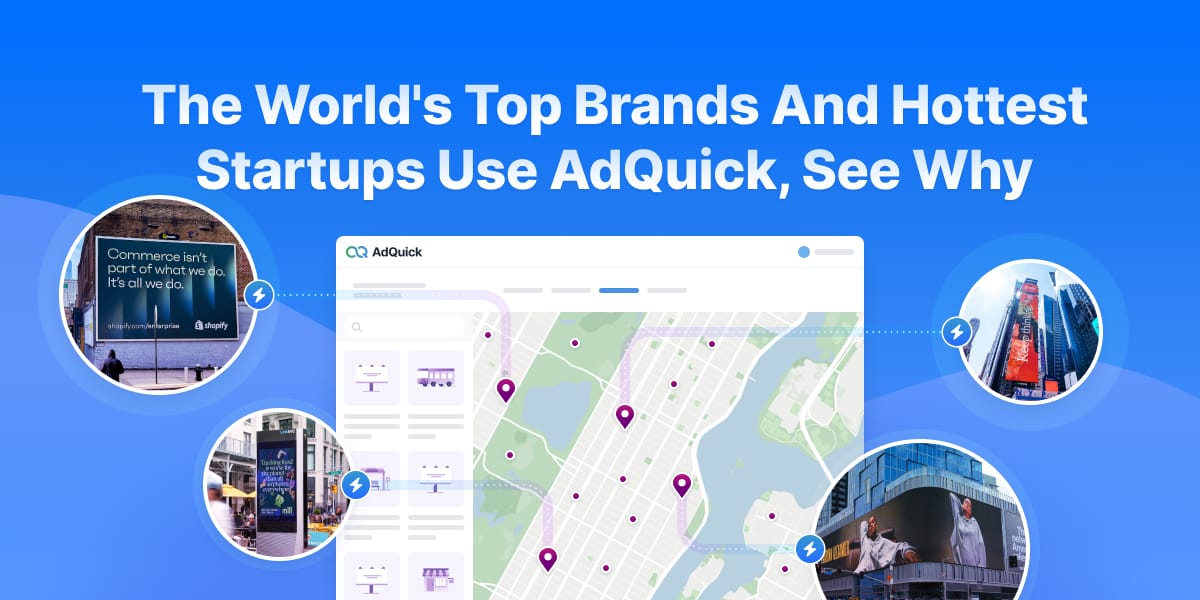
With AdQuick, executing Out Of Home campaigns is as easy as running digital ads. Plan, deploy, and measure your real-world advertising effortlessly — so your team can scale campaigns and maximize impact without the headaches.
3. AI is making brand memory even more important
This is the part more B2B companies need to pay attention to.
Search is changing.
Buyers are not only Googling anymore.
They are asking AI tools.
They are asking communities.
They are asking peers.
They are asking private groups.
They are asking, “Who should I look at for this?”
And increasingly, the companies that get recommended are not always the ones with the most SEO pages.
They are the ones with the strongest signals.
Brand mentions.
Founder visibility.
Useful content.
Audience engagement.
Third-party references.
Podcasts.
LinkedIn presence.
Newsletter mentions.
Community trust.
Category association.
In other words:
The internet has to know what you stand for.
Your market has to know what you stand for.
And your content has to make that obvious.
This is why faceless brands are going to struggle.
Not because every company needs a celebrity founder.
But because buyers trust people faster than they trust polished corporate language.
A founder, operator, expert, or team member with a clear point of view can create memory much faster than a generic company page.
That memory becomes an asset.
And in a world where AI, search, social, and private recommendations all blend together, that asset becomes very hard to copy.
4. The best B2B companies are building media systems, not content calendars
A content calendar asks:
“What should we post this week?”
A media system asks:
“What do we want the market to believe six months from now?”
That is a very different question.
One creates activity.
The other creates direction.
A media system has recurring ideas.
It repeats core beliefs.
It educates the market.
It makes the founder or company more familiar.
It gives sales better language.
It gives customers something to share.
It gives partners a reason to collaborate.
It gives the category a story.
This is why podcasts, newsletters, video shows, founder-led LinkedIn, and recurring content formats are powerful.
Not because each individual piece changes the business overnight.
But because the repetition creates familiarity.
And familiarity creates trust.
And trust lowers friction when the buyer is ready.
That is the real game.
Not “Did this post generate a lead today?”
But:
“Are we becoming the company people remember when this problem becomes urgent?”
5. The new B2B funnel looks more like this
Here is how I would think about it:
Attention creates familiarity.
Familiarity creates trust.
Trust creates recall.
Recall creates consideration.
Consideration creates pipeline.
Most companies want to jump straight to pipeline.
But the market does not work that way.
You have to earn the earlier steps.
You earn attention by saying something worth noticing.
You earn familiarity by showing up consistently.
You earn trust by teaching, helping, proving, and taking a clear position.
You earn recall by repeating the right ideas until the market associates you with a specific problem.
Then, when the buyer is ready, you are already on the shortlist.
That is the part most attribution models miss.
They see the final click.
They miss the months of memory that created the click.
Key takeaways
B2B marketing is no longer just about capturing demand. It is about becoming memorable before demand exists.
Most companies are too focused on the small group of buyers who are ready now, which makes marketing more expensive and less differentiated.
Generic content does not build memory. Strong beliefs, clear frameworks, founder voice, stories, and repeated ideas do.
AI search and peer recommendations are making brand signals more important, not less.
The companies that win will not just have content calendars. They will have media systems.
The real question is not, “Did this post convert?”
The better question is:
“Will our market remember us when the problem becomes urgent?”
That's it for this week. If you're in the middle of this transition and you've got a war story - what's working, what's breaking, what you're seeing on the ground - hit reply. I read everything.
If this edition sparked an idea for you, share it with someone building in B2B.
See you next time.
Do what is good for your soul ❤️
Vivek